
PROFESSIONAL MASTERING FOR BANDS AND ARTISTS WHO REFUSE TO SOUND AMATUER
Whether it's a single, EP or a full album, I'll deliver you a release ready record that translates flawlessly on any speaker, any system, anywhere
In Good Company














Your Music Fully Realized
Delivering professional audio masters to artists and bands who are serious about their sound.
STREAMING MASTERS
Hi end stereo mastering for streaming singles, EP's, albums, mixtapes and compilations - every project handled with the same care, precision and attention to detail regardless of format or scale.
Add Subtext text. Click "Edit Text" to update the font, size and more.
To change and reuse text themes, go to Site Styles.
ALTERNATE MASTERS
Alternate masters for any delivery strategy - Instrumentals, clean edits, radio edits, TVedits and sync ready versions, ensuring your music is fully prepared for every opportunity that comes your way.
Add Subtext text. Click "Edit Text" to update the font, size and more.
To change and reuse text themes, go to Site Styles.
VINYL MASTERS
Vinyl masters carefully adjusted and optimized for the cutting process - ensuring your music translates faithfully from the digital domain to the warmth and depth of an analogue lacquer. Everyone's favourite merch!
Add Subtext text. Click "Edit Text" to update the font, size and more.
To change and reuse text themes, go to Site Styles.
CASSETTE MASTERS
Cassette masters adjusted and optimized for tape transfer and duplication - prepared to the exact specifications required for a faithful and nostalgic reproduction of your music on cassette.
Add Subtext text. Click "Edit Text" to update the font, size and more.
To change and reuse text themes, go to Site Styles.
APPLE DIGITAL MASTERS
Apple Digital Masters - mastered to the exact technical specifications required by Apple's certification program. As a certified ADM file provider, you can be sure your music sounds it's best in this format.
Add Subtext text. Click "Edit Text" to update the font, size and more.
To change and reuse text themes, go to Site Styles.
CD MASTERS
CD masters prepared and optimized for replication - including full DDP file creation, ensuring your music meets the exact technical requirements for professional CD manufacturing and duplication.
Add Subtext text. Click "Edit Text" to update the font, size and more.
To change and reuse text themes, go to Site Styles.
STEM MASTERING
Stem mastering with up to 8 stems - allowing for a more detailed and surgical approach to the mastering process when necessary, delivering greater clarity, balance and control across every element of your mix.
Add Subtext text. Click "Edit Text" to update the font, size and more.
To change and reuse text themes, go to Site Styles.
SESSION OPTIONS
Professional mastering your way - remote/online mastering for artists anywhere in the world, or attended sessions in studio for those who are local and prefer to be present. Same standards, same detail.
How It All Works
Transfer Mix Files
After reviewing the Mastering Delivery Spec sheet for optimum mix requirements, send your files securely via your preferred file sharing platform along with one or two reference tracks and any notes on how you want your master to feel.
Leave It With Me
Once your files are received I’ll take your mix through the full mastering process - utilizing a professionally treated room, neutral monitoring, a high end analog chain and digital plug-ins, with care, precision and a close ear on your vision from start to finish.
Masters Are Ready
With everything signed off and approved, your full suite of mastered audio will be delivered - formatted, optimized and ready for real world playback on any system anywhere so you can guarantee your uploads, duplication and pressing with confidence.
Press Play

Life's A Zoo - Guerilla Toss
Taken from the album You're Weird Now
Released on SubPop (2025)

New York, New York - Bermuda Kills
Sync cover for TV series Inventing Anna
Via Universal/NinjaTune/Netflix (2022)

Sideways - DZ Deathrays
Taken from the album Easing Out Of Control
Released on DZ Worldwide (2026)

Broadway Baby - Gnarcissists
Taken from the self titled album
Released on BLISS (2025)

Snake Handshake - DAD
Single
Released on Fear Icon Records (2024)

We Play The Funk - Five Alarm Funk
CMC & Silenta Remix feat Bootsy Collins
Released on Roca Records (2021)

Fearless - Bermuda Kills
Taken from production/sync catalogue
Released via Ninja Tune Publishing (2020)

On Her Way - SKUX
Taken from the EP Kudis
Independent release by Ayisha Jaffer (2019)
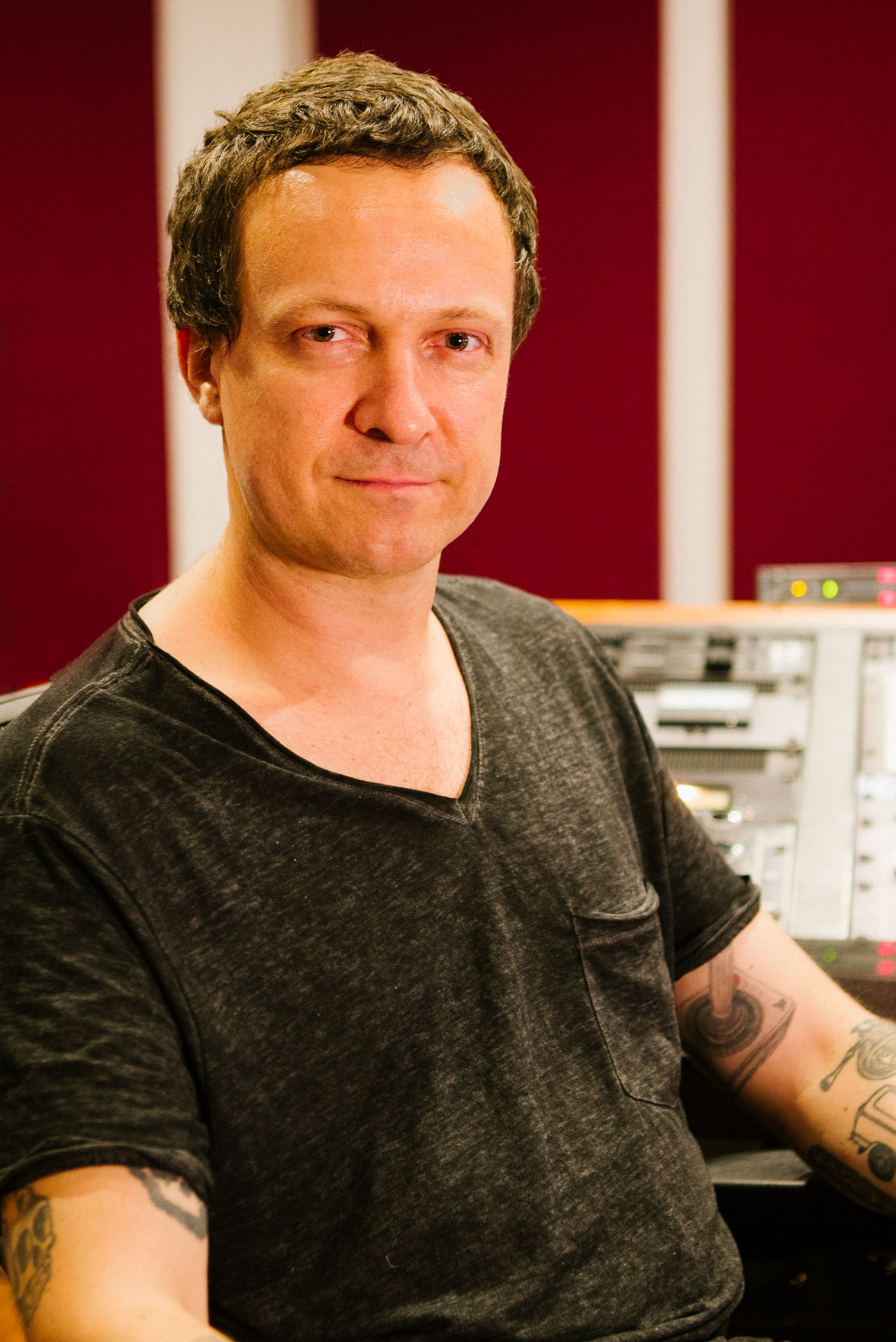
Hi, I'm Dan Walker. Mastering engineer here in New York City
With over 15 years of experience mastering records across multiple genres. My primary focus and love lies in rock and all its associated subgenres (indie, punk electro, psych etc).
I've worked with everyone from independent artists to signed projects and bands releasing on labels including Sub Pop, NinjaTune and Rough Trade.
My background as a touring musician/mix engineer/producer means I bring a deep understanding of what it took to make your record - and exactly what it needs to cross the finish line.
Frequently Asked Questions
When you're trying to get your music release ready, the questions can pile up fast..
Q. Can mastering really be done in the same mix room on the same speakers?
Technically yes - but it is rarely ideal. While modern tools and one stop shop studio arrangements offer convenience and cheaper alternatives, doing so on the same speakers and in the same room where you mixed can compromise the final result.
Here is why most professionals recommend separating these stages:
- Compounding Errors: If your room has acoustic "blind spots"—like a bass buildup or a dip at 2kHz—you likely compensated for them during the mix. Mastering in that same environment means you are more likely to double down on those errors rather than fix them.
- The "Second Opinion" Factor: Mastering is traditionally about objective quality control. Using a different room or a fresh set of ears helps catch issues you became "blind" to during the hours spent mixing.
- Translation Testing: A key goal of mastering is making the song sound great on all speakers. Skilled impartial ears and a neutral room are crucial to pinpointing issues that can contribute to an unbalanced translation across different playback systems.
Q. Why does my music sound quieter/thinner than everything else?
It usually comes down to a lack of controlled dynamics and tonal balance, rather than just "not being turned up loud enough."
The Fix: Mastering isn't just about a limiter; it’s about using an intentional combination of available processing types thoughtfully so as to increase the RMS (average loudness) without destroying the life of the song.
Q. Am I leaving something on the table by skipping professional mastering?
In short: Yes—perspective, polish, and protection. While AI tools, plugin presets or other cheap mastering alternatives can make a track louder, they lack the human decision-making required to ensure your art translates effectively in the real world.
Here is what I bring to the table that automated tools and shortcuts don’t:
- Objective Quality Control: After you’ve spent hours on a mix, your ears are "baked" into it. A mastering engineer provides the first set of fresh, impartial ears to catch technical glitches, clicks, or phase issues you can no longer hear.
- Acoustic Translation: A professional mastering suite is a "calibrated" environment. It reveals hidden problems—like a resonant bass note or a harsh high-end frequency—that home studios, poorly treated rooms and headphones often hide.
- The "Glue" and Flow: Mastering isn't just about one song; it’s about the cohesion of your brand. A pro ensures that every track on your EP or album has a consistent volume and tonal "identity" so the listener doesn't have to keep reaching for the volume knob.
- Competitive Edge: It’s the difference between a "good demo" and a "pro record." Mastering adds that final layer of professionalism that allows your music to sit comfortably next to major-label releases on a playlist.
Q. Why does my release sound great in the mix room but flat everywhere else?
This is known as a translation issue. If your monitoring environment isn't perfectly neutral, you are likely making mixing decisions to "fix" what you hear in your room, rather than what is actually in the file.
The Solution: Professional mastering happens in a critically accurate environment. I hear the "truth" of your mix—free from room reflections or speaker bias—allowing me to apply the surgical EQ and dynamic control needed to make your music sound massive on everything from AirPods to a festival rig.
Q. Will my record translate on a phone speaker, a club system, a car stereo?
Yes—and that is the primary goal of professional mastering. Each of these specific systems presents a different challenge, and a great master is engineered to "translate" across all of them in a balanced manner.
The Bottom Line: I don't just master for "perfection" in a studio. I master for the "real world". My workflow includes checking your track against a variety of environments and reference material to ensure your vision remains intact whether it's being whispered through AirPods or blasted at a festival.
Q. Am I actually release ready or do I just think I am?
It’s easy to lose perspective after hearing your own song 500 times. "Release-ready" isn't just a feeling; it’s a technical standard.
The Bottom Line: My job is to give you the "green light." If I hear something in the mix that will prevent a professional master, I’ll tell you before we start. When you get your master back, you won't have to "hope" it’s good enough—you’ll know it is.
Q. Can an algorithm understand the emotion and intention behind my record the way a human engineer can?
In a word: No. An algorithm is a series of mathematical "if/then" statements designed to hit a generic target. It can make a song loud, but it can’t make a song feel right.
- Context over Calculations: An AI doesn't know if that distorted bass is a "mistake" or a deliberate artistic choice meant to sound aggressive. It doesn't know if the vocals should feel intimate and "dry" or ethereal and distant. It simply tries to flatten the curve.
- Dynamic Decision-Making: Music is about tension and release. A human engineer knows when to let a bridge "breathe" and when to make a chorus "explode." An algorithm often "over-corrects" these moments, sucking the life out of the performance to stay within a pre-set parameter.
- The "Vibe" Factor: Mastering is the final creative touch. Whether it's adding "warmth" to a digital-sounding mix or just keeping things clean and transparent when it matters to the music, these are emotional decisions made based on the soul of the song, not just its frequency spectrum.
The Bottom Line: AI tools are great for quick demos, but they lack the empathy required to respect your artistic vision. I don’t master to satisfy an algorithm; I master to satisfy the listener.
Q. Can I really be objective about my own record after living inside it for so long?
The short answer is no—and that’s completely normal. After spending dozens (or hundreds) of hours writing, recording, and mixing, your brain begins to "fill in the gaps." You hear what you intend to hear, rather than what is actually coming out of the speakers.
- Ear Adaptation: Your brain is incredibly good at adapting. If your mix is a bit too bright, your ears will eventually normalize it. By the time you reach the mastering stage, you’ve lost the "fresh perspective" required to make unbiased tonal decisions.
- The "Parent" Bias: You know every struggle that went into every track. It’s hard to be objective about a vocal level when you remember how hard it was to record it. A mastering engineer doesn't have that baggage; they only hear the final result, just like your fans will.
- Decision Fatigue: By the end of a project, "good enough" starts to look very tempting. Having a dedicated mastering engineer provides a final quality-control checkpoint to ensure that your fatigue doesn't lead to a compromised release.
The Bottom Line: My role is to be the "first listener." I provide a transparent, unbiased perspective to ensure that the vision you’ve worked so hard on actually makes it to the listener’s ears without any "mix-blindness" getting in the way.
The good news is you don't need to figure any of this out yourself. Experience first hand what a fresh set of ears in a neutral room will do for your music and have your records mastered the right way, with care and intention.
If you have any questions or you're ready to get started, just click the button below and let's talk about your music
Are you ready to take you music to the next level?
Click the button below and let's get it!
© Copyright 2026.Mastering By Dan Walker. All Rights Reserved.